 Official supplier NATO CAGE CODE: AR679
Official supplier NATO CAGE CODE: AR679
Official supplier NATO CAGE CODE: AR679
Cart summary
Items in cart: 0
Total items: $ 0.00
Official supplier NATO CAGE CODE: AR679
teach these concepts not to encourage cracking, but to help developers understand Username Enumeration Logic Flaws so they can build more secure applications.
: Use protectors like VMPROTECT or Themida to make it much harder for reverse engineers to read your assembly code.
Attackers inject a custom dynamic-link library (DLL) into the software's process memory.
If you are a developer utilizing KeyAuth, relying solely on the default API integration leaves your software highly vulnerable. You must implement defense-in-depth strategies to secure your application:
For , use advanced obfuscators like ConfuserEx or Obfuscar to scramble method names, encrypt strings, and confuse control flow. 4. Deploy Anti-Debugging and Anti-Dumping Code Bypass Keyauth
Generation of timed keys (e.g., 1 day, 30 days, lifetime).
A "true" response is forced, tricking the software into loading without a valid key.
Once the attacker locates the assembly instructions responsible for evaluating the server's response, they look for conditional jumps. For example, a je (Jump if Equal) or jne (Jump if Not Equal) instruction determines whether the program proceeds to the main menu or terminates due to a login failure. The attacker patches the binary in real-time, changing a jne to a je or replacing the check entirely with NOP (No Operation) instructions, forcing the program to run regardless of the key entered. 3. DLL Injection and Hooking
KeyAuth provides an API that allows developers to integrate licensing into their applications. It is widely used in the gaming and private software communities because it offers features like: teach these concepts not to encourage cracking, but
The fundamental flaw in most bypassed applications is that the software's core logic resides entirely on the user's PC. KeyAuth offers a feature called and Download Files . Instead of checking if a user is valid and then executing local code, developers should store critical parts of the application's logic or essential assets on the KeyAuth server. The application should only retrieve these assets after a successful, authenticated handshake. If a hacker spoofs the server, they will receive a "success" state, but the application will lack the actual code or data required to function. Implement Robust Obfuscation and Anti-Debugging
: Most "bypasses" found on public forums are actually RedLine Stealers or other Trojans designed to steal your Discord tokens, browser passwords, and crypto wallets.
Since you are analyzing modern application security workflows,
: If an attacker attempts to redirect traffic to a fake local authentication server, the application will detect the mismatched certificate and immediately terminate the session. 3. Use Code Obfuscation and Anti-Debugging If you are a developer utilizing KeyAuth, relying
A common misconception is that a "KeyAuth bypass" indicates a flaw in KeyAuth itself. In reality, the vulnerability almost always stems from a by the developer. Typical mistakes include:
: Analyzing how a program is "cracked" at runtime by changing assembly instructions (like jumping over the if (authenticated) check).
If you're interested in this topic from a , I can write an article about:
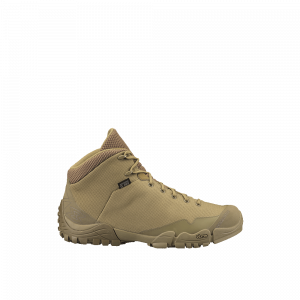
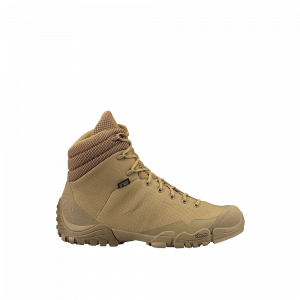
Because you added a pair of T8 boots to your cart, you are eligible to receive 35% off on a pair Nemesis 4 or 6 G-DRY in coyote or black! Don’t miss out on the savings!
Click below and choose the 4 or 6-inch height, select the color and size, and add the product to your cart